YOUNG INVENTORS PROJECT ()YIP)
Preserving the Natural InventorProject Concept
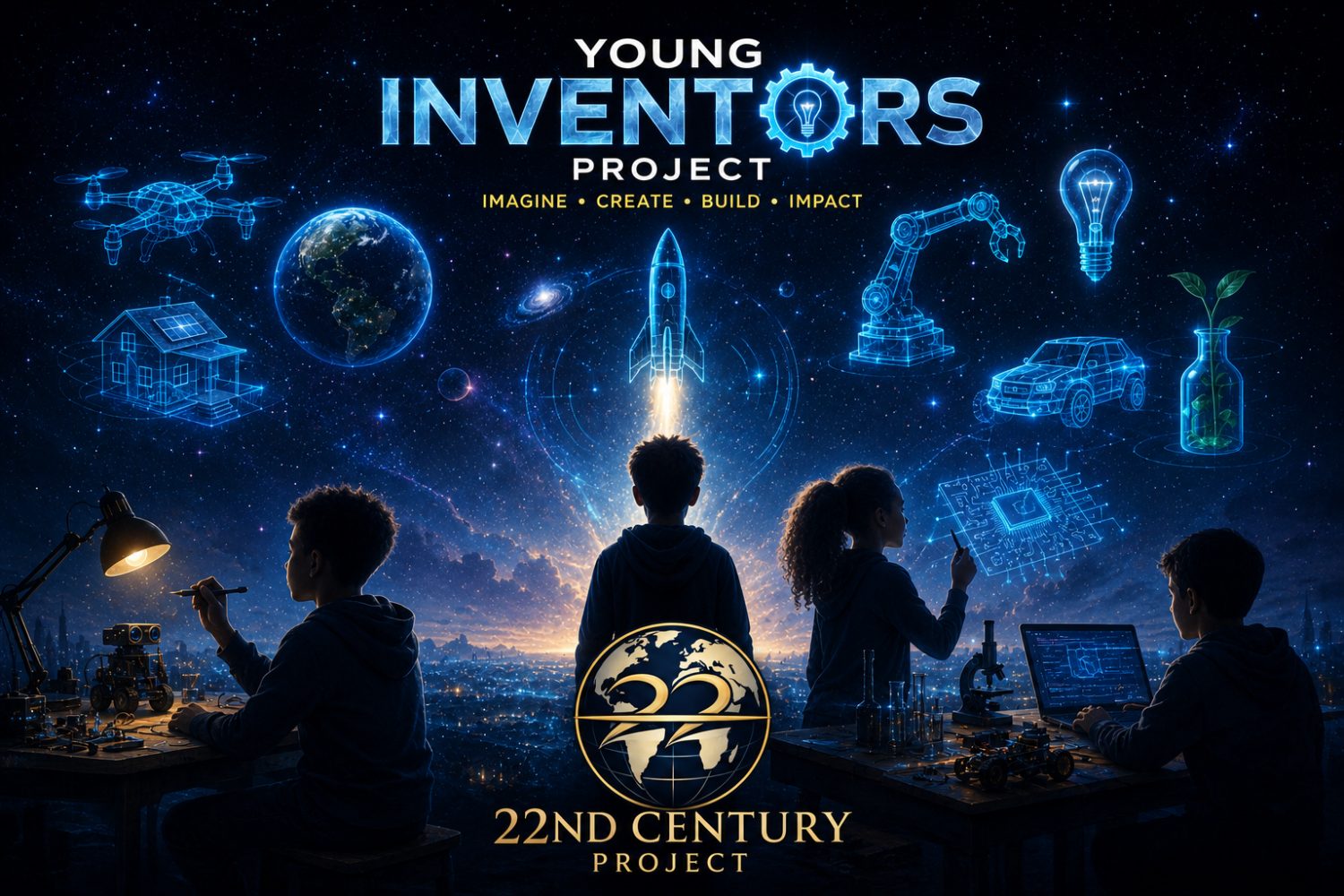
The Young Inventors Project (YIP) is an initiative for children between 8 and 16 years of age, designed to identify, preserve and strengthen the natural inventive abilities children often display while playing, experimenting and creating things for themselves.
A child who tries to build a toy instead of simply asking for one is already demonstrating an important capacity: the instinct to create rather than merely consume.
The project seeks to ensure that this capacity does not disappear as the child grows older.
Rather than attempting to manufacture inventors through formal instruction, YIP is based on a simple educational philosophy:
Education should enhance natural abilities, not attempt to manufacture abilities that are not naturally present.
Knowledge and technical skills are introduced as tools for improving an existing creative capacity.
The Problem We Are Addressing
Children often possess remarkably broad imaginations. They create machines, toys, imaginary systems and solutions without first worrying about whether their ideas are commercially useful or practically possible.
As they grow older, however, several things begin to change.
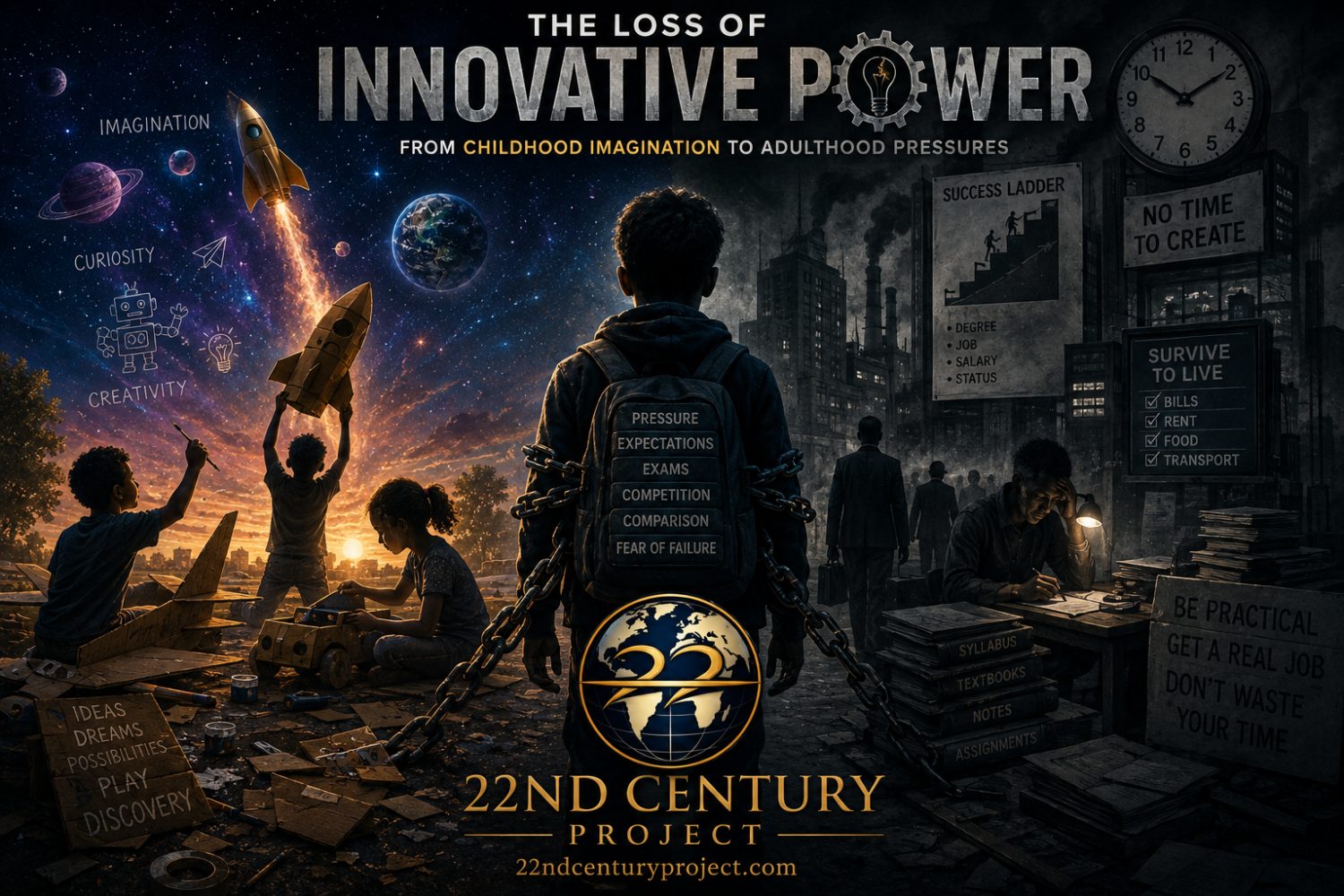
School demands, social expectations and eventually the struggle for economic survival increasingly consume their time and attention.

The young person who once built things simply because they were curious may eventually ask:
“How will this make me money?”
The pressure to survive can therefore narrow the space available for experimentation.
This does not necessarily mean that the individual's inventive capacity has disappeared. It may simply have been crowded out by adulthood responsibilities.
YIP seeks to intervene before this happens.
Our Philosophy
The project is built around the belief that children should not only be taught what is known; they should be given opportunities to explore what could be possible.
We therefore do not begin by asking:
“What invention can we teach this child to make?”
We ask:
“What is this child already naturally inclined to create?”
Our role is then to provide the environment, materials, encouragement, knowledge and mentorship necessary to augment that natural capacity.
A child who naturally enjoys constructing things may need engineering knowledge.
A child who naturally experiments with electronics may need electronics knowledge.
A child who constantly redesigns toys may need design and mechanical principles.
The knowledge follows the natural interest, rather than the natural interest being forced into a predetermined mould.
Who We Serve
YIP focuses on children 8–16 years old, particularly those who:
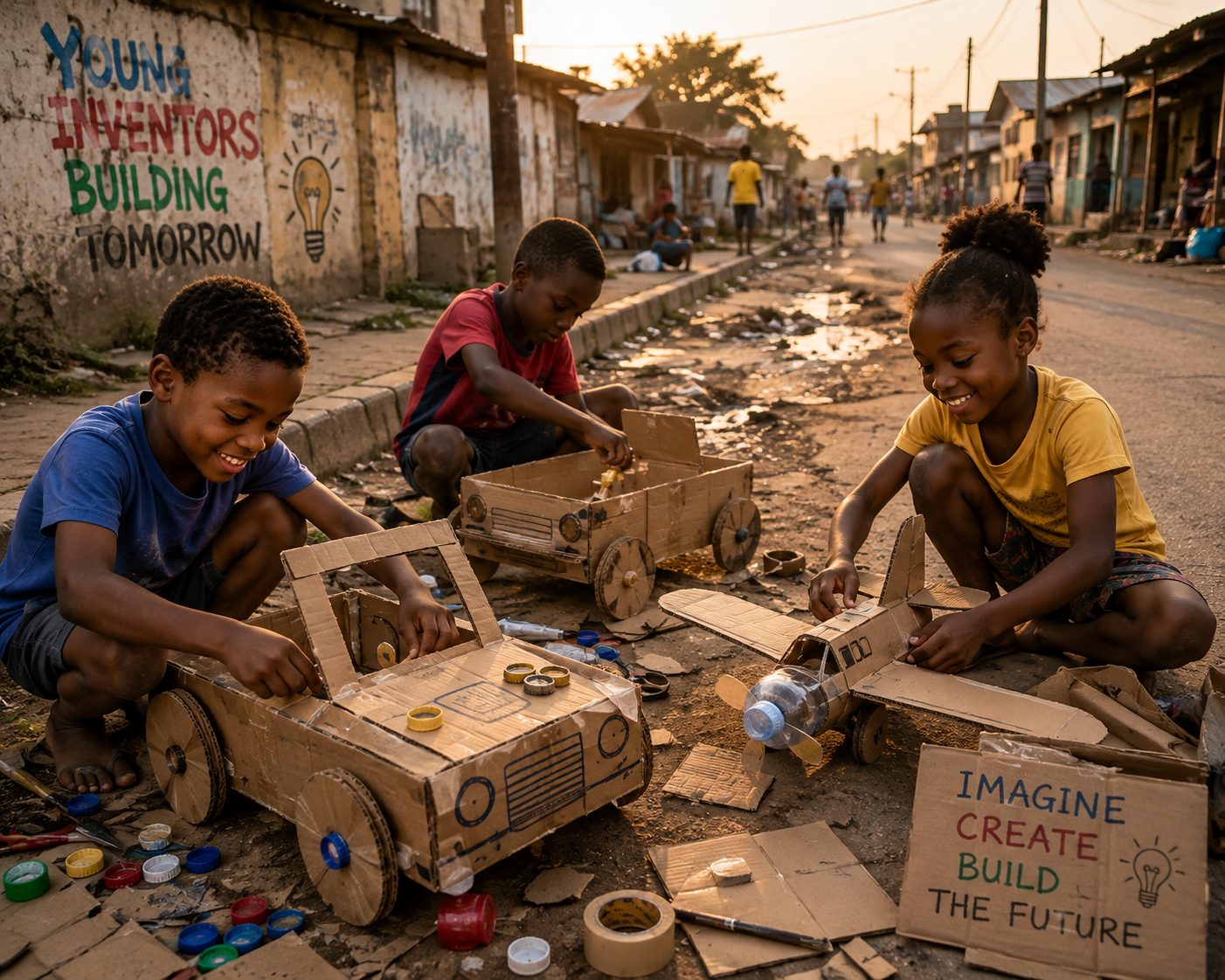
- make or modify their own toys;
- dismantle objects to understand them;
- constantly draw machines or devices;
- create unusual solutions to ordinary problems;
- experiment with materials;
- build things from discarded objects;
- enjoy discovering how things work;
- demonstrate unusual curiosity;
- naturally prefer creating to simply consuming.
Academic performance is not the principal criterion.
Curiosity, creativity, experimentation and the desire to create are.
Where the Project Operates
YIP is designed to reach children where they naturally gather rather than requiring every child to attend a specialised innovation centre.
Activities can be organised in partnership with:
- schools;
- event centres;
- playgrounds;
- communities;
- religious organisations;
- youth organisations;
- libraries;
- community centres;
- children's clubs;
- festivals and public events.
This makes the project accessible to children from different social and economic backgrounds.
From Toy Maker to Inventor
The project recognises an important developmental pathway:
Childhood Play → Making → Experimentation → Problem Solving → Invention

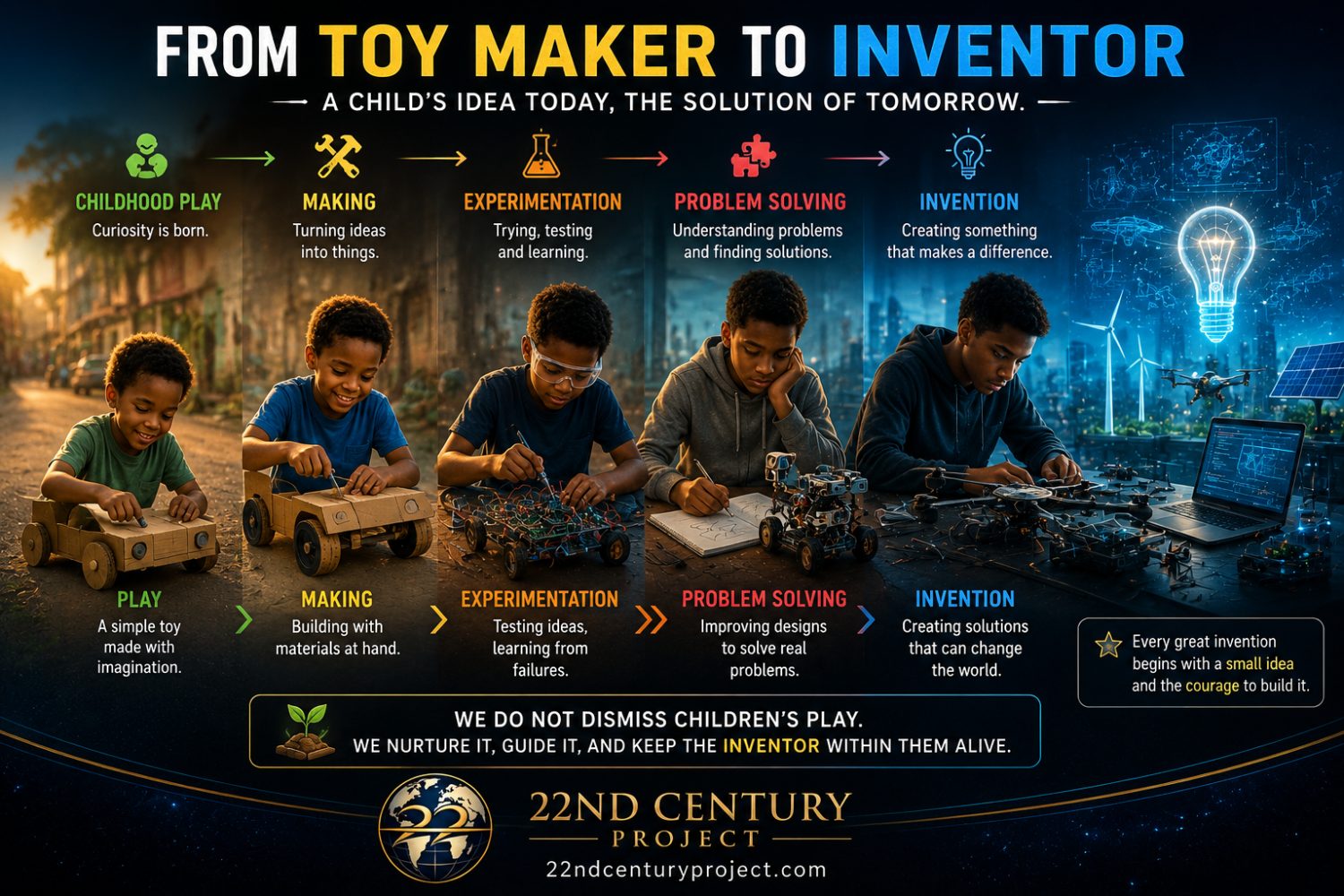
A child may begin by making a simple toy from cardboard.
Another may create a small vehicle from discarded materials.
Another may build a crude electrical device.
We do not dismiss these activities as merely children's play.
We see them as early expressions of inventive behaviour.
The objective is to keep that behaviour alive long enough for the child to acquire the knowledge necessary to make increasingly sophisticated things.
The YIP Method
The programme follows a simple principle:
Observe → Encourage → Equip → Teach → Build → Improve
We first identify what naturally interests the child.
We then provide materials and encouragement, introduce relevant knowledge, and allow the child to build.
Failure is treated as part of the learning process.
The child is encouraged to ask:
Why didn't it work?
What can I change?
Can I build it differently?
This develops not just technical knowledge, but the habit of thinking through problems independently.
The Inventor's Continuity
YIP is not intended to be a one-time competition.
Its greater purpose is continuity.
A child who begins building at eight should still have an environment for building at twelve, fourteen and sixteen.
As the child grows, the complexity of the projects can grow with them.
Simple toys can become mechanisms.
Mechanisms can become machines.
Machines can become systems.
Ideas can eventually become products, research projects or enterprises.
The objective is to ensure that the inventive instinct survives the transition from childhood into adolescence.
The Bigger Vision
The Young Inventors Project does not seek to create inventors artificially.
It seeks to protect the inventor that may already exist within the child.
We believe many children begin life with extraordinary imaginative freedom. The challenge is not always to give them imagination, but to prevent circumstances from gradually suppressing it.
Therefore, our central question is not:
“How do we teach every child to become an inventor?”
It is:
“How do we ensure that the child who already wants to invent does not stop inventing?”